Marco van Basten's goals are called "elegant" because they combine extreme difficulty with visual simplicity: clean first touch, minimal extra steps, perfect body alignment and precise, late decisions on trajectory. Coaches, analysts and players can treat his finishes as a compact model of efficient movement, angle management and composure under pressure.
Why Van Basten's strikes are labeled 'elegant' - a working definition
- Elegance = high technical difficulty that looks effortless and fluid in real time.
- Economy of touches: as few actions as possible between delivery and finish.
- Stable balance and relaxed upper body even in acrobatic positions.
- Late, accurate adjustment of foot angle to exploit tiny gaps.
- Harmony between run, cross and strike rhythm that feels "inevitable".
- Decisions shaped by team structure at Ajax, Milan and Oranje, not only talent.
- Practical model for modern finishing drills, video analysis and talent scouting.
Myths first: popular narratives about Van Basten's goals and which to challenge
The legend often starts and ends with the marco van basten goal vs ussr euro 88 - a volley from an absurd angle that defines "elegant finish" for many fans. Yet this goal is only one example in a broader pattern of how he solved complex situations with clean, minimalistic executions.
Myth 1: his elegance was pure instinct. In reality, his goals show repeatable technical choices: first touch away from pressure, body closed towards the far post, delayed swing. You can see the same mechanics in different matches when you study any detailed marco van basten goals video compilation.
Myth 2: his style is "untrainable genius". While you cannot copy his full package, you can train the ingredients: body control, angle reading, timing of the jump or volley and decision speed. The practical task is not to mimic the exact pose from posters, but to reproduce the underlying principles in training environments.
Myth 3: elegance means low intensity. In Van Basten's case, elegance coexists with high pace and heavy defenders. His touches are soft but decisive; his movements are economical, not slow. This is a crucial correction for coaches who confuse "calm" with "lazy" finishing patterns.
Breakdown of signature goals: angle, touch, trajectory and finish
To use his goals as a learning tool, break them into simple, coachable components. Use 2-3 reference clips from any marco van basten highlights dvd to illustrate each element below.
-
Starting angle to the goal
He often attacks diagonally, not straight. This opens the far post and hides the ball from the keeper. In the USSR volley, his run pulls him slightly away from the goal, so the finishing angle is narrow but the far top corner is exposed. -
First touch direction and height
Van Basten's elegance starts with how he "prepares" the ball. For crosses, he accepts imperfect height and adjusts his body instead of killing the ball dead. For ground passes, his first touch moves the ball into a shooting lane, rarely back into pressure. -
Body orientation before the strike
Shoulders slightly facing the far post, hips coiled, plant foot set early. This lets him hit across the ball with a controlled curve. Even in acrobatic volleys, the head is steady and eyes stay on the contact point longer than average. -
Contact zone on the foot
He frequently uses the "knuckle" area between laces and inside, not pure instep power. That gives him shape without over-rotating the ball. The elegance people feel is often just a consistent, repeatable contact that keeps the ball's flight clean and readable. -
Trajectory choice under pressure
Lofted but fast, usually clearing the keeper's reach by a small margin instead of spectacular, looping arcs. For low finishes, the ball travels flat and precise, rarely bouncing unpredictably. His best goals show that he solves the keeper's position, not just hits "as hard as possible". -
Follow-through and deceleration
After contact, his swing continues but the rest of the body "absorbs" the force smoothly. There is no wild spin or collapse. This quiet follow-through reinforces the visual sense of control - a key part of why his strikes look elegant rather than desperate.
Biomechanics and technique: balance, body torque and foot-eye coordination
If you coach or self-train, treat Van Basten's finishes as demonstrations of controlled imbalance: playing on the edge of falling while still producing accurate force. Typical application scenarios below can be trained directly from marco van basten goals video examples.
-
Wide volleys from looping crosses
Scenario: ball dropping over the shoulder, back slightly to goal. Practical focus: pre-jump timing, torso rotation and keeping the head stable. The USSR goal is the textbook example of using full body torque while keeping contact clean. -
First-time finishes under tight marking
Scenario: defender attached to the back, little time for control. The elegance here is micro-adjustment: short, compact swing, using the defender's pressure to stay upright instead of fouling. Train turning hips faster than shoulders to disguise shooting direction. -
Chipped and lifted finishes over advancing keepers
Scenario: through ball, keeper rushing out. Van Basten often delays the last step, forcing the keeper to commit first. Biomechanically, he keeps the ankle locked but loosens the knee to lift the ball smoothly without exaggerated scoop. -
Headers with "passing" motion
Scenario: crosses where power already exists. He uses neck snap and upper-body twist to steer, not just to smash. For players, copying this "pass with the head" concept can dramatically improve control on aerial chances. -
Finishing after diagonal cuts inside
Scenario: right-footed striker cutting in from the left half-space. His balance lets him shoot while still moving sideways, with the plant foot slightly behind the ball line. Train this by pairing diagonal dribbles with immediate far-post curls from different speeds.
Tactical build-up: how Ajax, Milan and Oranje constructed his scoring moments
Elegance is not only about the last touch. Ajax, Milan and the Netherlands created patterns that allowed Van Basten to show his strengths. Understanding these structures helps coaches design similar chances for modern forwards, not just admire one of the best dutch football legends marco van basten in isolation.
Strengths created by team structure
- Frequent wide overloads that produced deep, hanging crosses for volleys and headers.
- Midfielders playing early vertical passes between lines, forcing defenders to turn and chase.
- Full-backs and wingers instructed to cross into zones, not heads, trusting his movement.
- Rotations that left him 1v1 on the weak-side centre-back, ideal for acrobatic finishes.
- Clear understanding that he preferred attacking the far post from the left channel.
Constraints and limitations to recognize
- His elegance depended on quality service; in chaotic, transition-heavy games he had fewer "beautiful" chances.
- Frequent foot and ankle injuries reduced his explosiveness, making off-ball movement more important than raw pace.
- Modern crowded penalty areas and zonal defending offer less space for theatrical volleys.
- Current data-driven coaching often prioritizes low shots and tap-ins over high-difficulty, aesthetic attempts.
Aesthetics of perception: rhythm, timing and the viewer's sense of beauty
Many fans discover him today through a short marco van basten highlights dvd clip or social-media reel. The feeling of elegance comes from how his actions fit into the rhythm of the move, not just from slow-motion replays.
-
Illusion of effortlessness
Viewers underestimate how much micro-adjustment happens in the last steps before a volley or header. Because his upper body looks relaxed, people assume it is "natural", not trained. -
Timing with the cross, not with the defender
His jumps and swings are synced with the ball's flight. This creates a visual "click" when contact happens at the perfect moment, which the brain reads as beautiful. -
Clear narrative within the chance
Many iconic goals show a mini-story: impossible angle, sudden decision, sharp resolution. The USSR volley, for example, compresses doubt and surprise into one motion. This strong narrative bias makes that goal overshadow his simpler but equally elegant finishes. -
Camera angle and crowd reaction
Classic TV angles framed his body and the ball in one continuous line. Immediate crowd noise after the strike reinforces the sense that something extraordinary and clean just happened. -
Romantic halo around his short career
Early retirement and relatively few full seasons add a nostalgic filter. A limited archive of great goals, repeatedly seen in the same clips, makes each finish feel more "perfect" than a random highlight from an active star.
Comparative analysis: Van Basten versus contemporaries and modern forwards
To apply his example usefully, compare how he finishes similar chances versus other elite strikers. Treat it as an analysis routine you can repeat when you study any classic or modern player.
-
Define the situation type
Example: wide right-foot volley from a left-sided cross, tight angle, no time for control. -
Collect 3-5 clips
Include Van Basten (for example the USSR goal), a contemporary (like Lineker or Papin) and one modern forward. Use reliable sources rather than random, over-edited marco van basten goals video montages. -
Evaluate on three simple axes
a) Touch economy - number of touches from delivery to shot.
b) Body stability - how much the head and torso move during contact.
c) Trajectory control - how "clean" and predictable the ball's flight appears. -
Write a short observation block
For each player, describe in one or two sentences how they trade off power versus control. You will usually find Van Basten near the "maximum control with sufficient power" point, which matches the intuitive label of elegance. -
Translate into training cues
Based on the comparison, define 2-3 cues (for example "set plant foot early", "head still on contact", "attack far post from diagonal run") and build finishing drills around them. That is how studying one of the best dutch football legends marco van basten becomes practically useful, not just nostalgic.
For players and fans, even items like a marco van basten jersey for sale or a retro marco van basten highlights dvd can become tools: wear the shirt or watch the disc with a clear checklist of angles, timing and body cues you are trying to notice and later reproduce in your own game.
Clarifications on common misunderstandings and quick answers
Is Van Basten's Euro 88 volley really the most elegant goal ever?
Aesthetic judgments are subjective, but that strike combines extreme difficulty, perfect timing and clean trajectory, so it often tops lists. More important than the label is using the moment to study angle, approach and body control in detail.
Can modern forwards realistically copy Van Basten's style?
They cannot copy his exact repertoire, but they can adopt his principles: economy of touches, diagonal runs to the far post and controlled volleys. These ideas fit well into current positional play and can be built into finishing drills.
How should I study his goals for coaching or self-improvement?
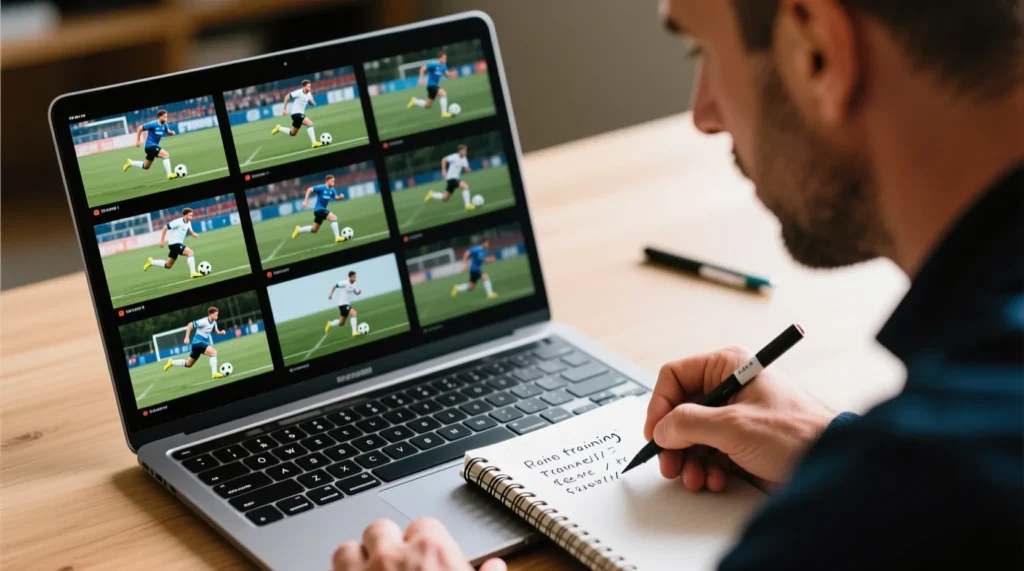
Pick 5-10 clips, ideally full-action rather than tight replays. Watch run-up, first touch, plant foot, head stability and follow-through separately. Take notes on recurring patterns and turn them into simple cues for training sessions.
Are his goals mostly about technique or about tactical positioning?
Both matter. Without good tactical structure from Ajax, Milan and Oranje, he would get fewer ideal scenarios. But within those structures, his superior technique and coordination explain why his finishes look more elegant than teammates' attempts.
Why do some people say his elegance is "untrainable"?
Because they focus on the final picture, not on the small, trainable components. While you cannot recreate his entire profile, balance work, volley mechanics, heading technique and angle reading can all be developed systematically.
Is it useful for young players to watch only historical legends like Van Basten?
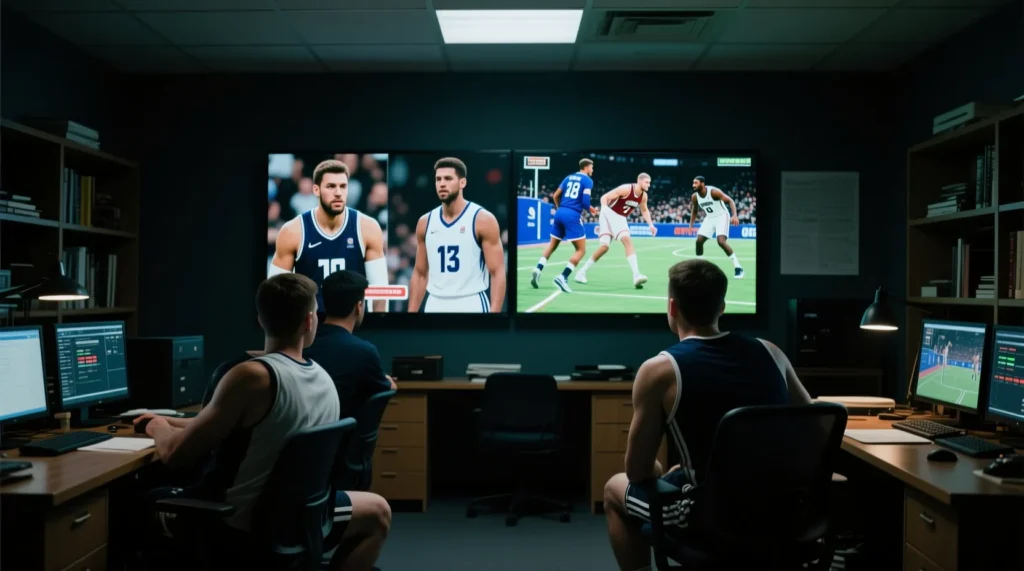
Yes, if they also watch current players and compare solutions to similar problems. The best approach is to mix archived legends with modern examples and treat all of them as case studies of how to finish efficiently under pressure.
Does collecting his memorabilia help in a practical sense?
Objects like a marco van basten jersey for sale have mainly emotional value. They can increase motivation or connection to the game, but practical progress still depends on structured study, repetition and feedback on technique.